The Late Arrivals Board
populism as a response

Can the medicine work if you name the wrong disease?
The German Substacker who posts as Eugyppius wrote this weekend on “The grave and increasingly obvious limitations of populist politics,” in a useful essay that’s well worth reading. He starts that discussion with two descriptions to identify the topic:
First, “Across the West, the political elite have become estranged from their native populations.” True, deeply and for a long time, and I assume we all see this, while seeing the “elite” as a status group that possesses nothing but self-credentialing systems to make them elite in the first place. There’s nothing actually elite about them. I would bet a kidney that the average member of Congress is significantly less knowledgeable than the average gas station cashier. Any use of the word “elite” that encompasses Mazie Hirono and Al Green is…not useful. Ed Markey. Tina Smith. Patty Murray. Stop me when you hear the name of someone elite. And it’s straight down from there, by the way. I assume that when the California legislature makes toast they have to ask a grown-up to help them with the butterknife.
But second, “As Postwar Television Democracy succumbs to the internet and as it is increasingly clear that the fat years are behind us and the future portends nothing but ever leaner years as far as the eye can see, an organic opposition has taken shape.”
This is the part that I wonder about. The diagnosis is that populism is a response to economic decline and a future of less, especially less stuff and everything that happens around the question of how much stuff you’ll have: less security, less comfort, less hope to advance and prosper. Your children will be a little less affluent than you are, and their children will be even a little less affluent, and so on. It makes sense to see populism through that lens in Germany, where a manufactured energy crisis and the resulting trend of deindustrialization do suggest a lean future. More on this question shortly.
But it looks like something else from America’s Germany, the declining post-industrial failing state called California.
I spent the week on backcountry trails…
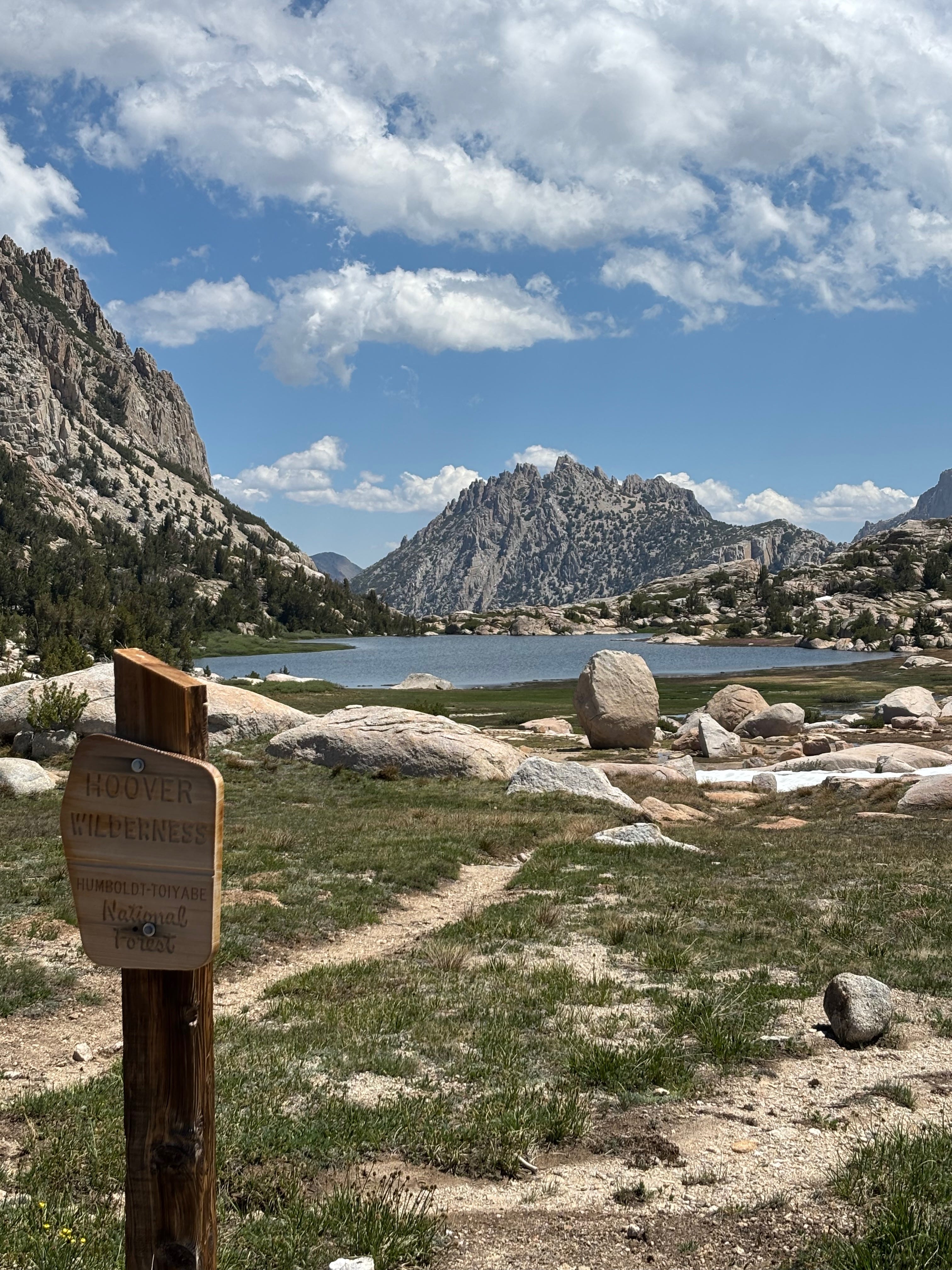
…and what happens back there is that you walk for hours without seeing anyone, then bump into a complete stranger in the absolute middle of nowhere. If someone hurt you or stole from you out there, you might be able to get some professional help within…a day or two? If you were kind of lucky? You’re at least a full day of walking way the hell out into the mountains, strangers meeting strangers. The sign on the other side of the trail says “Yosemite National Park,” by the way, and this is the remote boundary between the Forest Service-managed Hoover Wilderness and that other place. Snow Lake sits at a little over 10,000 feet, as you cross from Crown Lake over to Kerrick Meadow, through Rock Island Pass.
What almost always happens when strangers wandering in the mountains run into each other in a place without other people is that they stop on the trail, and then you talk about where you’ve been and where you’re headed. Because you’re usually coming from opposite directions, unless you’ve overtaken a slower hiker, you trade trail intel: You need microspikes through Mule Pass? How are the mosquitos out at Peeler?
Everybody is always enthused by all of it. You’re headed out to Matterhorn, HELL YEAH, that’s awesome. We were over at Crown Lake, OH MAN THAT’S SO COOL.
After a couple minutes of that, you say, “Hey man, have a great time out there,” and then everybody goes back to taking their very long walk. This dynamic seems to be universal, and it’s the same conversation between old men and young ones, solo backpackers and groups, men and women, people who ran wild on the Platinum Card at Patagonia and the inevitable backcountry eccentric in a cotton sweatshirt and some old running shoes. The trail is a casual equalizer.
In the small towns along the Eastern Sierra where people go to start these trips or come back from them, the trail ethic holds. The hotels are mostly staffed for a few hours, and then if you have a reservation but show up after the office has closed…
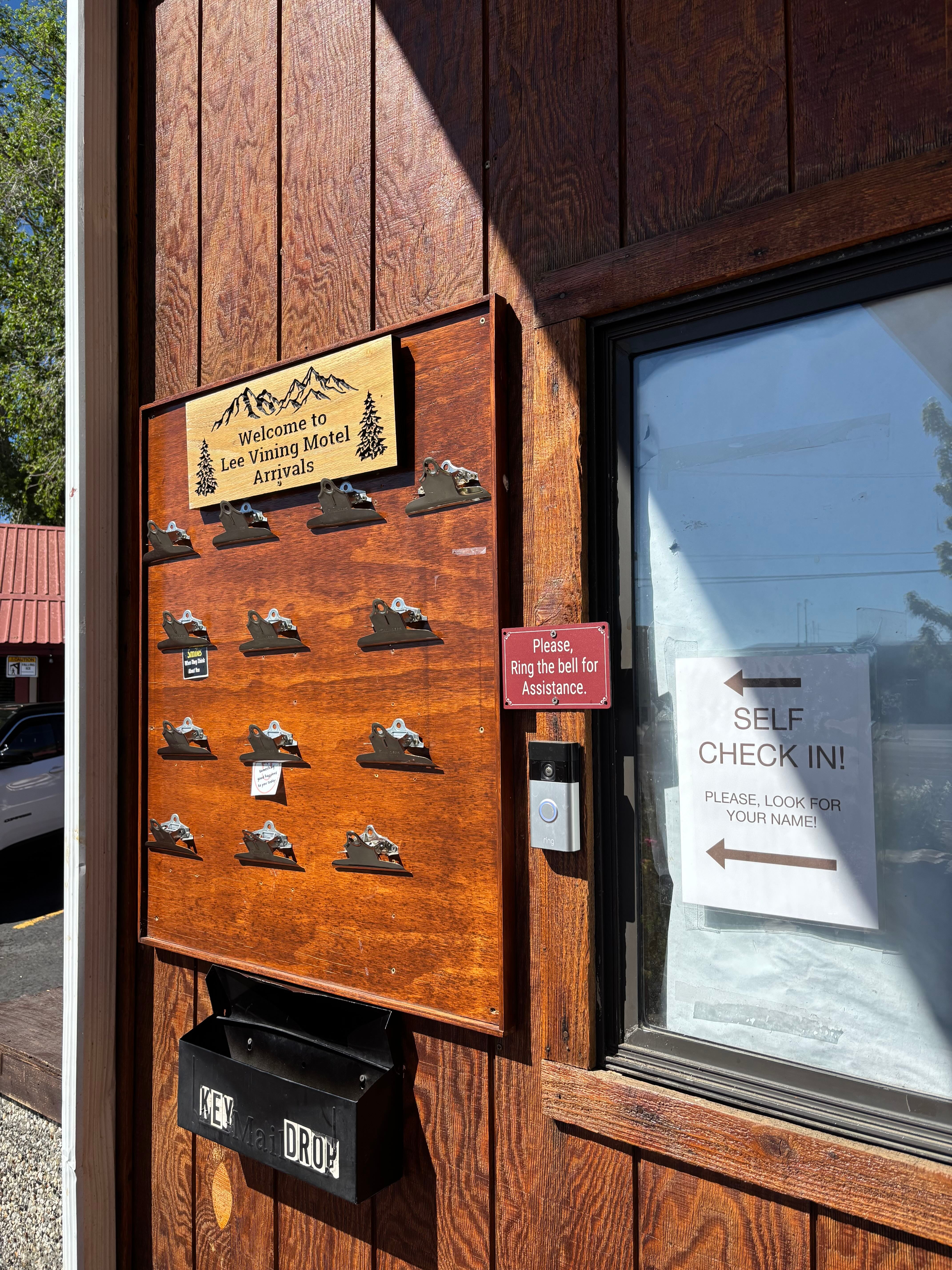
…your room key or your door code are hanging on the late-arrivals board in front of your hotel. I called a small motel in the Eastern Sierra once and said that I was running late, and they left my room key in front of the door. We’re headed home, man, just let yourself in.
Similarly, in places full of backpackers, everyone dumps their backpack in front of the store or the whatever, and everyone assumes that it’ll be there when they get back.
When I experience all of this, I remember that I live in a place where I don’t have any of it. And I live in an unusually safe and peaceful Los Angeles suburb, but Los Angeles is Los Angeles. Homeless encampments always pile up bicycles, so you assume your bike will vanish if you live near an encampment. Of course packages will be stolen off your porch. Of course an unlocked door is an invitation. Of course a store has to price to cover losses from regular daily shoplifting.
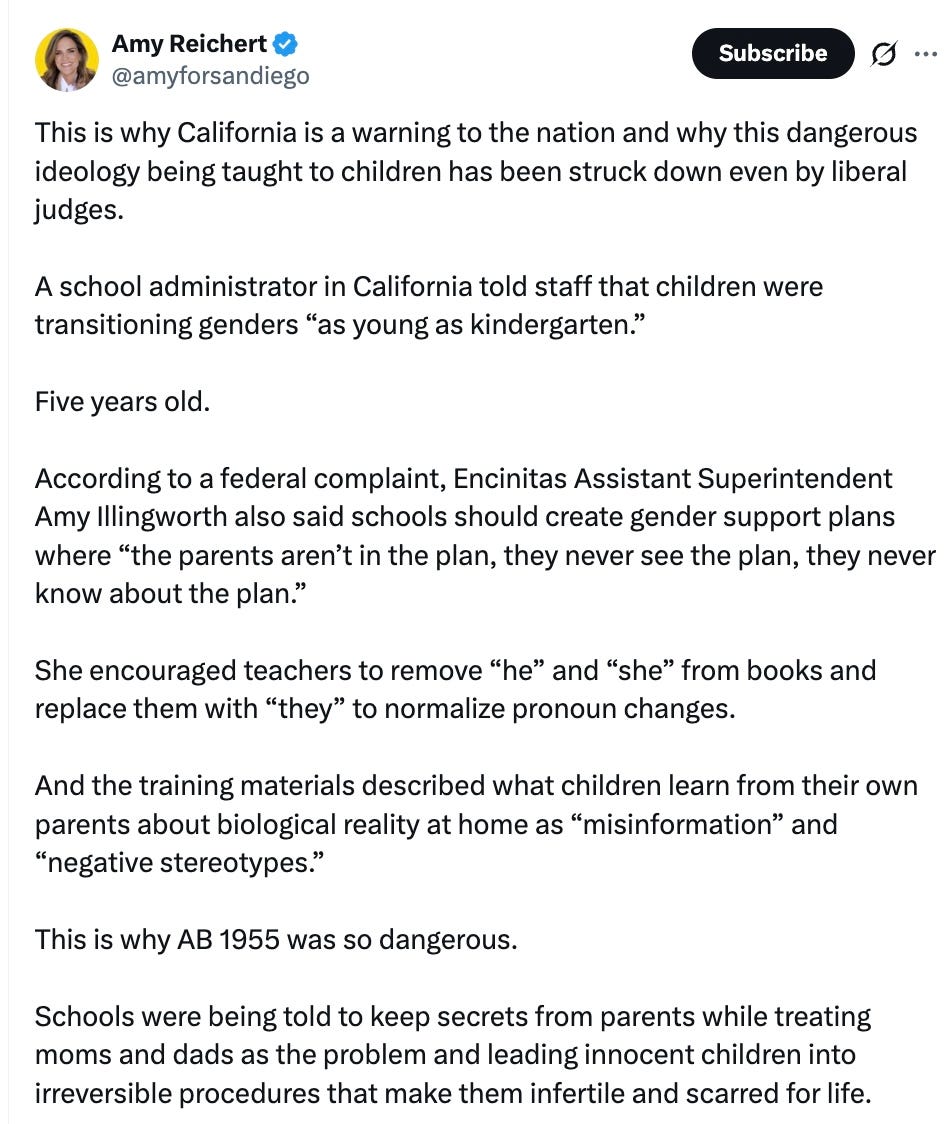
And more, depending on where you live: Child-grooming gangs, the threat of rape as an increasingly routine social fact, police without basic sense or a mildly functional moral compass. To varying degrees, we have institutions that exist to do (X) when we need someone to do (X), but we know that they mostly won’t do (X). The helping professions don’t just not help, but sometimes their interventions make everything catastrophically worse.
Institutions are harming people because institutional power is flowing to catastrophically stupid and evil people (who are inevitably characterized by abundant self-confidence and smug certitude).
This isn’t an economic problem. It’s not that “the future portends nothing but ever leaner years.”
What we miss, I think, isn’t the casual assumption that growing prosperity is the norm, but rather the hundred-daily moments of behavioral reflex that happen when you have reason to assume that most people around you mostly mean well. What we mourn is the death of high-trust society. What we miss is leaving a bike on the porch and assuming it’ll still be there in the morning. We miss social trust. We miss leaving the keys hanging from a hook on the late-arrival board.
The problem with this diagnosis is that it renders populism almost definitionally inapt as a response. We’re trying to heal cultural wounds with political tools. Many of the cultural wounds were caused by political tools, as Henry Nowak’s horrifying death reminds us, but we can’t vote to make people healthy and good. Voting better might fix a quarter of the problem, and that’s probably being generous.
California is full of healthy communities and healthy people, outside of the shithole cities, and the state is governed by the dismal post-human scum of the earth. The gears of the political problem don’t mesh neatly with the gears of the cultural problem.
Returning to the economic theme, part of the loss of trust relates to economic injury, and you can watch Steve Bannon tell a mindless slogan-chanter that many young Americans are like 19th-century Russian serfs who will never own property here. (Herp derp, she responds, you’re saying that you hate women. Journalism: institutions that don’t do what they exist to do, even though we need them to do it.) The other end of that reality is taxpayer-funded Somali daycare centers with no children: Corrupt institutions lose trust because we know that they exist to gorge on what’s left, wearing the skinsuit of categories that merit respect.
But I don’t think the core injury that triggers a populist response is an economic injury. I think we’re in mourning, more deeply than we allow ourselves to say, over the death of routine social trust, and we’re groping in the dark for something that will bring it back. Talk me out of it.
If you’re ever depressed by any of this, by the way, go to the mountains. Fear and anxiety don’t help. I mostly agree with that essay from Eugyppius, especially parts like this: “In Western democracies, ruling oligarchs pursue a contrary strategy of mass politicisation, whereby the people are bombarded all the time with the most obnoxious political slop for the purpose of recruiting them into useful formulaic ideologies intended to motivate optimal voting behaviour.”
Politicians want you to hurt and worry, and you shouldn’t. Walking makes you feel better. Go outside.
Well said. I’ve been living in Brussels since the late 70s. My son has moved to Zurich for studies and we visit him from time to time. Last time, as we were wandering through town, clean streets, friendly people, a sense of security, we realised that was exactly what Brussels was like about 30 years ago. Then we went and spent a month visiting Japan. Same sense, young children walking to school on their own, adolescent girls biking home in the evening after study, friendliness, calm and a sense of security everywhere. Just like Brussels 30 years ago. Then we realised what these 2 countries didn’t do for the last 30 years, and we cried inside for the loss. We did it to ourselves, and we keep voting for those destroying our lives. Maybe we deserve it.
the reason the late arrivals board works is because crime is the province of the lazy
why hike for miles to snatch a backpack when you could be a porch pirate on your own turf (or if you're really ambitious, open a learing center or a needle exchange program)
there's also a corollary here: those with the energy and passion to hike for miles have better things to do than to make off with somebody else's property